Patrick Stewart Was the Leader We All Wanted to Believe In
Patrick Stewart was a legend who made us want to believe that intelligence and empathy really could save the world.

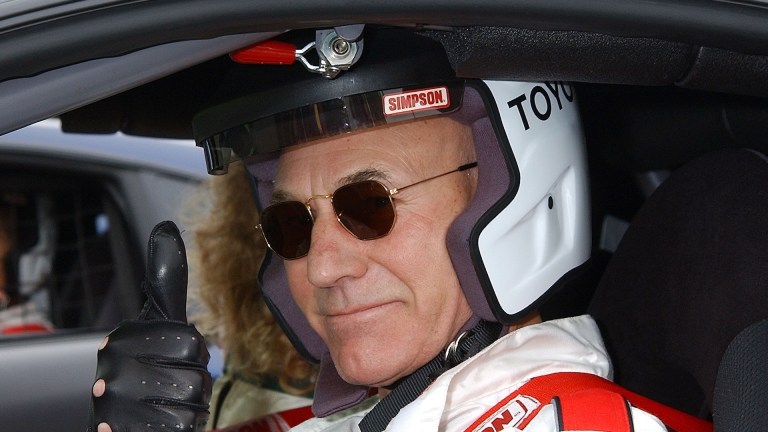
Many performers get tagged with the label legend. Sometimes that feels a bit ambitious. But for Sir Patrick Stewart, it’s a word that doesn’t feel grand enough. A classically-trained actor from a working-class family in Yorkshire who spent decades with the Royal Shakespeare Company before mainstream fame came calling, his career spanned over six decades on stage and screen. His death at the age of 86 has left multiple generations of fans in mourning, whether they first discovered his talent on the bridge of the USS Enterprise, in the hallways of Xavier’s School for Gifted Youngsters, or at a Broadway theater.
A quintessential British actor with a distinctive baritone voice (he dropped his Yorkshire accent in drama school), Stewart played all sorts of roles over the course of his long career. Some of his more offbeat choices included a flamboyantly gay interior designer (Jeffrey), the owner of a skinhead Nazi bar (Green Room), a debaucherous deputy CIA director (American Dad!) and King Arthur’s father-in-law (Excalibur). But his legacy for so many of us will always be tied to two surprisingly similar men: Jean-Luc Picard and Charles Xavier.
Granted, Picard and Xavier are separated by at least a thousand years and several galaxies. One is a powerful telepathic mutant; the other is a French starship captain. But these men were not just compelling characters; they were genre-defining figures who helped reimagine what the kinds of stories—so often mocked or looked down upon—could be and do. It’s easy to see why Stewart was drawn to these roles, and why audiences everywhere responded so strongly to his performances in Star Trek: The Next Generation and the X-Men films. These are the kinds of leaders we wish to see in the world: Intelligent, empathetic, thoughtful, diplomatic, and morally upright. Men who believe in the better angels of humanity (or alien kind, depending on your perspective) and who exhort those around them to do the same.
After the bombast of William Shatner’s James Kirk, Stewart’s Picard initially felt like something of a strange choice for The Next Generation’s captain. In fact, Stewart’s agent told him the role was unlikely to disrupt his stage career, since the show probably wouldn’t make it past a single season. Instead, it ran for seven and changed Stewart’s life, along with those of millions of fans in the process. As a character, Picard was remarkable for many reasons, but perhaps for nothing so much as his ability to model a different kind of masculinity in a genre space heavy with hot-headed action types. Picard’s leadership style skews more diplomatic and philosophical than belligerent, seasoned with a heavy dose of empathy and emotional intelligence. He’s the kind of captain you go to war for, but who would never ask you to. And Stewart consistently finds the humanity and vulnerability in a figure that, in a different sort of show, could have stayed remote, stoic, and untouchable.
Stewart’s presence in the X-Men films does much the same. The fact that he signed on to these movies at all feels like something of a miracle. After all, he was an actor who’d already irrevocably tied himself to one long-running franchise; why would he make the leap into another? But his decision to play Xavier had far-reaching consequences we’re still seeing onscreen today. His presence helped legitimize the entire concept of comic book movies as a serious cinematic enterprise in a way that no previous outing had yet managed. And while Hugh Jackman’s Wolverine may have been used as the face of the X-Men films, Stewart’s Charles was undoubtedly the franchise’s heart. (There’s a reason that Xavier is the character that somehow keeps being brought back to get killed off over and over again.)
Stewart’s performance softened many of Xavier’s more comic-accurate arrogant edges, adding a warmth and tenacity that made the character believable as both a mentor-ish father figure and a steadfast leader who refuses to give up—on his students, on humanity, on a helmet-wearing villain who was once his best friend. The franchise’s most outspoken idealist—occasionally bowed, but never broken—Xavier constantly advocates acceptance, forgiveness, patience, and second chances. “Just because someone stumbles and loses their way doesn’t mean they’re lost forever,” he tells his younger self in X-Men: Days of Future Past, a mantra that should feel preachy, but instead is a time-looped reminder of his own most sincerely held belief.
Even off-screen, Stewart’s was a consistent beam of light in a world (and industry) with far too much darkness. He purposefully used his fame and platform for good, speaking out against domestic violence, advocating for animals, and being a generally fabulous LGBTQ ally, often with his BFF Sir Ian McKellen by his side. He even took to reciting daily sonnets over social media during the COVID-19 pandemic in the hopes of offering calm and comfort during the global lockdowns. They say never meet your heroes, but many of the traits fans most loved about Stewart’s characters seemed clearly reflected in his real life.
That Stewart and his work meant a great deal to many, many people is evidenced by the almost uncountable number of tributes pouring out onto the internet tonight, from former co-stars and friends to talk show hosts, advocacy organizations, brands, and fans from all over the world. But while we have lost a true legend, his impact will live on long after him, in every viewer his work touched, and in a pair of franchises that probably wouldn’t exist today without him. To paraphrase Winnie the Pooh author A.A. Milne, how lucky we were indeed to have had something that makes saying goodbye so hard.