Top 50 movie special effects shots
There's more to a great visual effects shot than iconic status, and here are fifty that really paid their way...

CRITERIA FOR THIS LIST:This is not a list of ‘iconic’ SFX shots, such as the opening shot in Star Wars or the final shot in Back To The Future, etc. There are many fantastic SFX shots in cinema history that are artistically ‘awesome’ without qualifying here. For the purposes of this list, a shot has to be either a) exceptionally convincing, b) ground-breaking or c) an exemplary execution of an oft-used technique. Only one shot is allowed per film.
A note about pagination (why the entries on this list are divided this way)

50: Alien: Resurrection (1997) – Ripley clone matures

Jean-Pierre Jeunet’s quirky fourth entry to the Alien series boasts many eccentric touches worthy of mention, including an elegant solution for the astronaut who even has to carry his whiskey freeze-dried, as well as the first CGI examples of H.R. Giger’s stunning creature design. But oddly it’s Resurrection‘s use of a pretty old (and pretty cheap) CGI trick that really takes one’s breath away, as the adolescent Ripley clone that those mad space-scientists are brewing up morphs into her adult state, with Sigourney Weaver’s features. Both the child and adult maquettes were created by Tom Gillis and Alec Woodruff and morphed together by effects house Digiscope. Morphing was already old news from John Landis’s video for Michael Jackson’s Black And White, Casper (1995) and various others, but this was the first time the technique had ever been used as something more than a party-trick. Adolescent Ripley was created by Gillis and Woodruff using a base model onto which were imposed the features of young Weaver, and derived from pictures supplied by the actress.
49: Just Imagine (1930) – Descent to New York penthouse
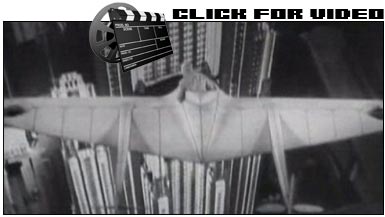
David Butler’s ‘answer’ to Germany’s Metropolis (see below) apes Fritz Lang’s astounding imagery whilst jettisoning its social message with utter abandon. This Buck Rogers-like tale finds briefly-popular US comedian El Brendel catapulted into New York, 1980, where the numbered citizenry get around in flying cars and where marriage is arranged by the state. Though the movie’s early visuals are spectacular, they are strictly there to establish period, and Just Imagine soon descends into a poorly-written (and notoriously anti-Semitic) musical. One advancement on Metropolis is in evidence in this shot, however, as the camera actually begins to move around the city. Unfortunately the remarkable model-work and good camera-movement is unwisely used as a projection backdrop for a full-sized flying-car prop that is obviously too heavy to be suspended on wires. Nonetheless, the amount of motion in this shot, combined with excellent and mobile miniature-work, makes it perhaps the earliest predecessor to the ‘Spinner’ sequences in Blade Runner.
48: The Day After Tomorrow (2004) – Manhattan floods.
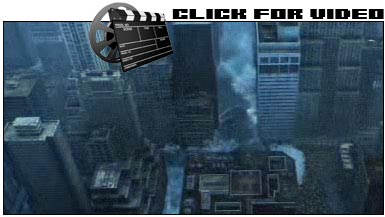
Roland Emmerich continues to destroy the world in this ecological disaster-movie, and VFX house Digital Domain turned out some outstanding fluid simulation work in the flood sequences. For the shot in question, however, the fluid sim was provided by Tweak Films, with Christopher Horvath and Day After Tomorrow VFX supervisor Karen Goulekas overseeing the shot (one of five which Tweak contributed to the movie). Depicting water is one area of SFX where the CGI luddites tend, wisely, to shut up. SFX debacles such as those in Raise The Titanic (1980), The Dambusters (1955) and the ‘Hoover Dam bust’ in Superman (1978) only go to prove that water simply does not scale at anything but 1:1. Calculating (or impersonating) the confluences and counter-collisions that an incoming flood of water will make against the maze of Manhattan is a mind-bogglingly difficult task, and we can only pay this shot the compliment of saying that it ‘looks right’.
47: Saving Private Ryan (1998) – Bullets in the water.
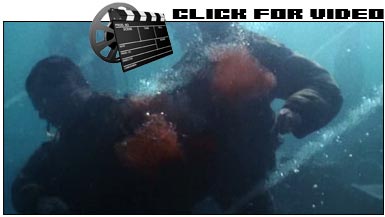
Just as efforts such as Cube (1997) and Robert Zemeckis’ Death Becomes Her (1992) and Forrest Gump (1994, see #13) were beginning to bring ‘body horror’ into the CGI age, Steven Spielberg turned CGI mutilation to arguably its most serious use in recreating the visceral horror of the Normandy landings. If not the most violent film ever made, Saving Private Ryan must be in the top 10 somewhere, but has so sombre an ambit as to inspire respect instead of disgust. The shot in question was – at least for me – educational, since I had wondered before just how lethal a bullet could be through water. Soldiers fleeing into the sea from their decimated landing-craft found that the ocean was no protection against suitable artillery, and the zipping projectiles, complete with foamy trails, are totally convincing here.
46: The Fifth Element (1997) – Bruce Willis’s air-taxi pulls out of the garage.
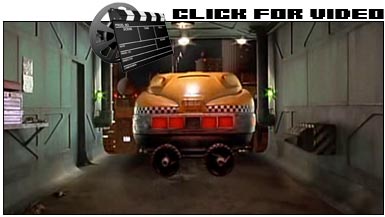
The surfaces and lighting are flawless in this shot of the flying yellow-cab setting off for work, but crucially it’s the accuracy of the physics that sells it. As the cab brakes to avoid an oncoming vehicle, its weight settles back into its own suspension before forward-thrust takes it off again for a right turn. It’s a little thing, but it makes a huge difference, and is arguably one of the biggest barriers CGI has yet to confront. Another excellent example of correct weight and movement in an exit is the 180-degree turn that the Millennium Falcon makes when exiting the Death Star in Star Wars (original 1977 release). That’s ironic, since it’s turning in zero-gravity and should have no weight. But then, there’s no sound in space either.
45: Minority Report (2002) – Maglev hovership takes off
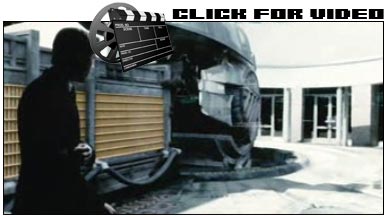
As in #46, above, the sense of weight and resistance is what sells this astonishingly elegant shot from Steven Spielberg’s adaptation of the Philip K. Dick short story. One common technique (though it is a bit of a blunt hammer) for blending an incongruous element into a canvas is to dictate a limited or particular colour-palette for the work, and it must be admitted that Spielberg’s almost entirely desaturated movie has a black-and-white advantage in terms of achieving verisimilitude. The one unfortunate aspect of this shot is the clumsy addition of exit-vent haze, a real cancer among Hollywood CGI artists, who all need to be shipped off to wherever Britain sold the last of its Hawker Harriers and made to take reference footage.
44: Brazil (1985) – ‘Harry’ Tuttle makes a dramatic exit.

Robert De Niro’s improbably heroic plumber (and ‘freelance subversive’) makes two exits-by-guy rope in Terry Gilliam’s enjoyable perversion of Orwell’s Nineteen-Eighty-Four, but the second one is the real jaw-dropper. Gilliam stands with James Cameron (himself once a successful effects artist for Roger Corman) in the role of exemplary old-school FX guru, with a preference for build-and-film rather than adding anything later.
43: Dune (1984) – Worm attack.
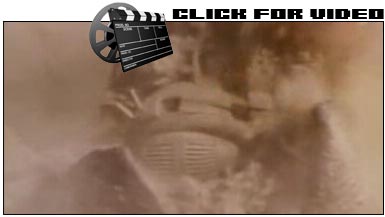
Scaling sand is easier than scaling water, but even so this is an incredibly ambitious shot for the pre-CGI era. Part of the charm of the shot is Carlo Rambaldi’s tripartite worm, which raises up its prey like a Venus flytrap before clamping down on it. Barry Nolan and Van Der Veer studios were in the firing line when much of the worm SFX was criticised on first release, but this shot would be ambitious even for current computer technology. Find out more about the worm SFX here.
42: The Abyss (1989) – loss of tension.
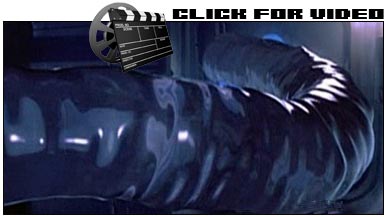
The idea of suspended fluid losing tension has been dabbled with in a number of science fiction movies over the years, including Star Trek VI: The Undiscovered Country (1991) and Event Horizon (1997). It’s an effective trick which usually involves little more than a milliseconds’ distortion of the composited element (sea-snake, blood droplets, water droplets, etc) before cutting into a horizontal split-screen where prop-water hits the floor, but it’s one of those cases where a valuable connection is formed between an ‘alien’ (i.e. artificial) element and the real world. For The Abyss, James Cameron got to know all about transparency algorithms in 3D modelling, whereas the subsequent Terminator 2: Judgement Day (1991) was an object-lesson in reflection-mapping. One wonders what his third-stage would have been if JurassicPark had not taken up the lead.
41: Howard The Duck (1986) – The Dark Overlord rises.
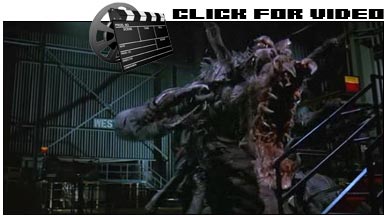
Just as there haven’t been any fundamental changes to the principles of the internal combustion engine in the last 100 years, neither has a century wrought that much change in the art of stop-motion animation. Legendary creature-maker Phil Tippett added one wrinkle, however, with his ‘Go-motion’ technique, which is rather unscientifically explained as ‘twanging’ the model armature at the moment of exposure when motion-blur is needed. Tippett’s go-motion dinosaurs were the first to become extinct when ILM began some interesting CGI experiments for Steven Spielberg and JurassicPark. Tippett himself evolved very nicely as a specialist in CGI creatures with an unparalleled reputation for realistic movement inherited from years as a stop-motion animator. Star turkey Howard The Duck benefited from go-motion with an impressively animated finale.
40: Star Trek: The Motion Picture (1979) – Entrance to V’Ger
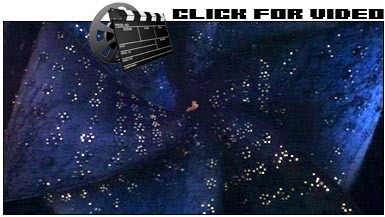
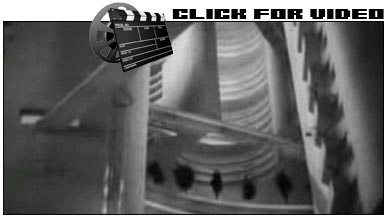
The entrance to the inner heart of TMP‘s monstrous space-urchin follows the organic motif established so impressively in Douglas Trumbull’s (perhaps excessively-used) footage of V’Ger. The thing is, it’s very hard to tell how that organic aperture is actually working. Is it an iris of some kind or are the ‘petals’ actually changing shape? Truth is that the gate segments are actually cones spinning in unison. Since the camera remains perpendicular to the circular bases of the cones, the secret is hard to guess.
39: Invasion Of The Body Snatchers (1978) – The spores spread.
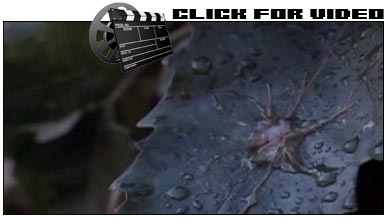
Very small-scale prop-work with moving parts is an incredible challenge often overcome by using an oversized environment. That trick was used to bring to life the plant-based alien life forms which arrive in spore-clouds to take over humanity in Philip Kaufman’s atmospheric remake of the 1956 horror and sci-fi classic. The expansion of the tendrils is a reverse-effect (by SFX leader Howard Preston) that works because of the constancy of the zoom, and these are very convincing – if unwelcome – flora.
38: When Dinosaurs Ruled The Earth (1970) – Leading the dinosaur.
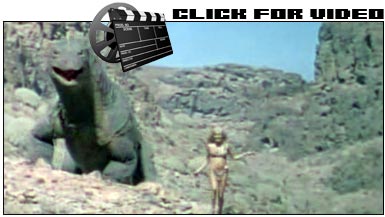
Jim Danforth – twice nominated for an Oscar – was the powerhouse matte painter and animator called in by Hammer Films when Ray Harryhausen was too busy with The Valley Of Gwangi (1969) to take part in the studio’s sequel to One Million Years BC (1966). Though not as quick as Harryhausen, Danforth – pre-empting ‘go-motion’ – experimented with motion blur and got better results out of his flying pterodactyls than the master himself. However, that’s not why this shot is in here. What’s exceptional about the dinosaur’s pursuit of Victoria Vetri is how optical wiz Les Bowie has really inserted him into the environment, whereas so much stop-motion animation of the 1960s was clearly divided between freeze-framed background/foreground plates and the animator’s work. It’s a challenging piece of matting, particularly on one of Hammer’s notoriously penny-pinching budgets.
37: The Fearless Vampire Killers (1967) – The party-crashers revealed.
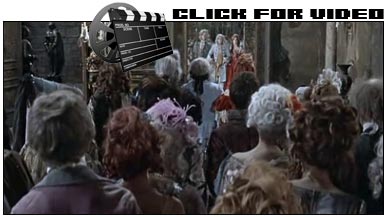
Sometimes the oldest trick in the book is all you need. Thus reasoned Roman Polanski when his vampire-movie spoof required that the ‘infiltrators’ at a vampire ball be revealed as the only reflections in the ballroom mirror. Of course, the ‘reflections’ are out-of-focus doubles trying to ‘mirror’ principals Jack MacGowran, Roman Polanski and Sharon Tate, but once something works, anything more is pointless.
36: Dragonslayer (1981) – Vermithrax Pejorative rises.
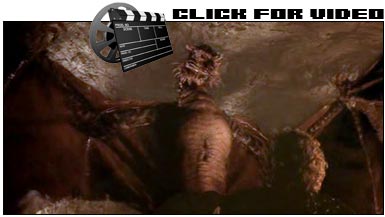
Having made a notable foray into stop-motion in The Empire Strikes Back (1980), Industrial Light & Magic produced arguably their most impressive work in the field for Disney’s stab at the sword-and-sorcery genre. It must be admitted that one of the reasons Vermithrax is so amazing is that you have to wait such a long time to see him, but in truth the lighting and movement of the evil beast is unparalleled in the field. This dragon wasn’t seriously challenged until the CGI dragon’s ‘crash-landing’ shot in Rob Bowman’s under-rated Reign Of Fire (2002).
35: Transformers (2007) – Slow-motion motorway pursuit.
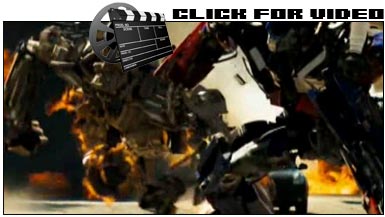
This is the only robot SFX shot in Michael Bay’s harmless technological bash-fest that I totally buy, and the reason, I think, is to do with motion blur. Since this shot has been designed and rendered for slow-motion, the blur effect has been omitted (or at least greatly reduced, as one commenter suggested), and suddenly the robots really seem to be there, rather than impressively superimposed. Along with kinetics and physics, it’s very early days yet for CGI artists as regards an understanding of motion blur in anything but a solid object constantly moving in one direction.
34: Fantastic Voyage (1966) – Journey into the alveoli.
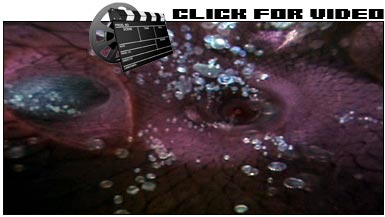
Art Cruickshank and company created some spectacularly psychedelic special effects for Richard Fleischer’s highly enjoyable tale of inner space, but the model work and filming of the interior of the lungs is really exceptional – if unlikely – stuff, and the difficulty of moving a camera down a totally enclosed set is handled with aplomb.
33: Jason and the Argonauts (1963) – Fighting the skeletal warriors.
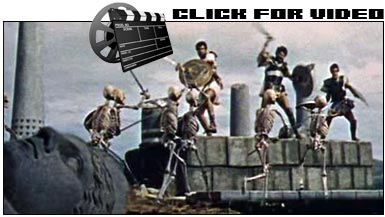
Ray Harryhausen’s most celebrated feat of stop-motion remains enduringly impressive, not only for the sheer invention of the skeletal warriors that rise from the ‘seeds’ of dragons’ teeth, but for the sheer number which the grand master assembled for a series of enormously complex shots. The shot seen in the video is a composite of one single set-up with the inserts removed.
32: Apollo 13 (1995) – Blast off.
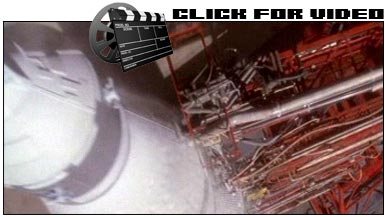
Derek Meddings (#5) has launched more orbital payload vehicles than NASA, but his efforts (in such films as Moonraker and Doppelganger) were finally capped by Digital Domain’s superb recreation of the launch of ill-fated Apollo 13. Footage of the Apollo launches is part of the planet’s iconography, so the challenge to recreate that experience is immense, and ultimately it’s only the curse of the ‘roving 3D camera’ that turns an astonishingly detailed recreation slightly ‘plastic’.
31: Diary Of The Dead (2007) – Acid to the head.

Spin VFX turned in a superb combination of motion-capture and CGI grue in George Romero’s otherwise disappointing follow-up to Land Of The Dead (2005). Here our heroes have attacked a zombie with sulphuric acid, and the ‘citizen’ camera lingers at great length on the revenant’s demise. With the actor moving and the camera hand-held, there are two fields of relative motion to take into account when calculating the position of the CGI acid-melt, and this is the kind of naturalistic CGI footage that – together with the hand-held work in Cloverfield – at least supplies some kind of reason to pursue the ‘amateur footage’ angle.
30: Dead Ringers (1988) – Track in on the twins.
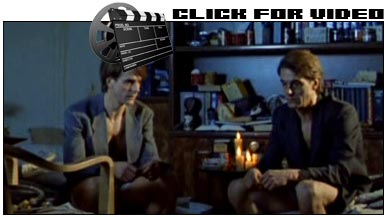
Actors playing dual roles is an old story in Hollywood, though the cheap double-exposures have given place to sophisticated motion-control work. What has yet to be done effectively is shooting a scene with a ‘doubling’ actor hand-held – or shooting a scene outdoors (the light is likely to have changed by the time the actor is in his or her ‘other’ make-up; the exterior shots of ‘young’ and ‘old’ Thomas F. Wilson in Back To The Future Part II show the difference in lighting conditions between the ‘split’ takes). In Dead Ringers David Cronenberg is standing on the achievements of many before him, and pre-empts Robert Zemeckis’ exceptional actor-doubling in the Back To The Future sequels, which used the ‘Vistaglide’ roving motion-control camera designed by ILM. Most of Zemeckis’ motion-control repeat passes occurred from a locked-off base (with the camera swivelling on several axes but not itself moving), but Cronenberg dares to move his camera fluidly around the sets. The fact that the technical aspects of production must have been so daunting can only add to Jeremy Irons’ achievement in creating two distinct personalities for the disturbed gynaecologist twins without going all ‘evil Kirk’.
29: 2001: A Space Odyssey (1968) – Entering the airlock without a space-helmet.
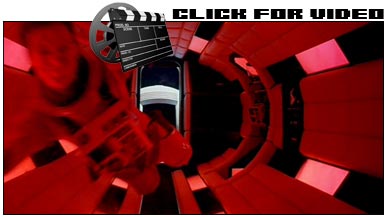
The pioneering rotoscoping and miniature work of Douglas Trumbull, Wally Veevers and Les Bowie often overshadows one of the most effective zero-gravity shots ever filmed – and, unlike on Apollo 13, the film-makers had no need to hire NASA’s ‘vomit comet’ to obtain it. In the movie Dave Bowman – Keir Dullea – is forced to re-enter a spaceship without a space-helmet, and does so by depressurising his lungs and blowing the explosive bolts of his EVA vehicle, which is pressed hard to the airlock. The shot was accomplished by positioning the camera directly beneath the pod and airlock set and ejecting a roped Dullea from the prop pod with an accompanying puff of propane. The angle hides the support wires, and the lack of any sound (until the cabin repressurises) is what really sells the shot. Arguably the ejection of the oxygen in one blast might have moved the pod away, but that’s perhaps an unreasonable quibble. There are too many other SFX shot contenders from 2001 to even begin to list them here.
28: Gladiator (2000)- Entering the coliseum.
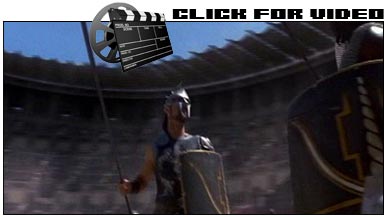
A show reel shot for SFX company Mill Films and compelling trailer-fodder to boot, this recreation of gladiators entering the Roman coliseum is an exceptional meeting of superb cinematography and cutting-edge CGI effects. Arguably it’s the fact that the actors are standing in front of a bit more than a green screen that really sells it – a large proportion of the lower sections of the coliseum were built on location in Malta, and blended seamlessly with the 3D architecture. Apart from anything else, this shot is a triumph of the rotoscoper’s art, as Russell Crowe and company have had to be extracted from the ‘missing’ parts of the background on a frame-by-frame basis.
27: Blade Runner (1982) – Spinners in the rain.
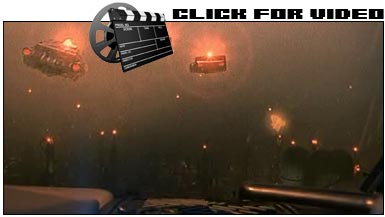
Douglas Trumbull’s work on Close Encounters Of The Third Kind (1977) took him out of the airless freedom of space and into the need to make flying saucers glow in the misty plains of Ohio. It was on CE3K that Trumbull perfected the very long exposures needed to get adequate and convincing depth-of-field in low-light conditions, combined with the use of a custom-built machine that dispersed fine oil mist into the air at a strictly regulated rate, which allowed the lights of the models to cut through a dense, Earth-like atmosphere. These techniques surfaced again in creating Philip K. Dick’s bleak vision of the future for Ridley Scott, with flying police cars ‘(‘Spinners’) floating through smog-drenched Los Angeles. Many beautiful city shots emerged, where Trumbull made the superimposition of stock rain footage realistic by obscuring areas of it that did not correspond to light sources in the background plate. For this particular shot Trumbull went the extra mile, and added a windshield with rain droplets as a foreground element to Deckard’s journey to meet Eldon Tyrell. Such a shot should not have been possible in the days of photo-chemical SFX.
26: Forbidden Planet (1956) – Entering the Krell underground.
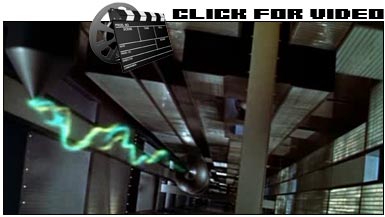
Inserting real people into matte paintings or hanging miniatures is an SFX technique predating motion pictures, but A. Arnold Gillespie and colleagues went one better for this introductory shot to Leslie Nielson’s tour of the vast underground labyrinth left behind by an alien civilisation in this sci-fi classic: the camera filming the large Metropolis-like miniature pans around to a pre-fixed position, at which point footage of actors Walter Pidgeon, Nielson and Warren Stevens walking through the MGM car park is matted in. The same technique is applied to later shots but with rostrum movement and slightly less convincingly (one can plainly see that the actors are moving in daylight and also discern the concrete of the car park). The initial movement of the camera in our featured footage sets up the conceit that it can move any time it likes, and reinforces the realism of the shot.
25: Aliens (1986) – Express elevator to hell.
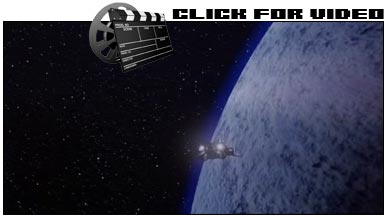
James Cameron brought old Corman colleagues the Skotak brothers on to his production of the much lauded sequel to Alien. They had worked before on the SFX teams of Battle Beyond The Stars (1981) and Galaxy Of Terror (1982), and this reunion only re-iterated that it was a great partnership. Cameron and the Skotaks used the most appropriate technique for each shot, meticulously planning them with sawdust-and-string’ animatics (later to become a habit in Hollywood). The very grainy Kodak film stock on which Aliens was shot permitted an extraordinary amount of practical model-on-wires footage, and the results rank amongst the best ever obtained by that method. This shot is a more traditional (by then) motion-control effort, but what makes it outstanding is Cameron’s demanding vision of how much movement it should have, and the extraordinary sense of scale and drama. SFX shots as mobile as the deployment of Aliens‘ dropship were not to become common practice in Hollywood until the advent of CGI; this is a truly audacious and ambitious piece of film which the makers pull off with jaw-dropping effectiveness. It’s almost a shame to look at it out of context.
24: Terminator 3 (2003) – Arnie’s ruined terminator face.
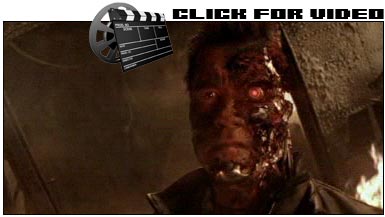
It’s not every ILM shot that makes it into arguably the most esteemed show reel of any effects house on the planet, but the sight of Arnold Schwarzenegger’s half-man/half-robot face in T3 is unfaultable and a sure candidate. The camera lingers on it, and it can afford to. Similarly astonishing work was achieved with Aaron Eckhart’s mutilated visage as Two Face in The Dark Knight, but unfortunately common sense kicks in after the shock and one realises that there’s no way Eckhart’s lower lip could maintain tension with that much damage to the left cheek. Here there are no such issues. With lighting, textures and fusion between actor and illusion absolutely pristine, it’s a perfect ‘trick’, selling the reality of the Terminator character as never before.
23: Frenzy (1972) – Back to Bob’s place.
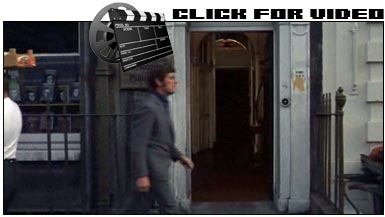
Poor Anna Massey unwittingly follows the ‘necktie killer’ (Barry Foster) back to his flat in Hitchcock’s hard-hitting London-based thriller. Hitch follows the couple up the stairs but then backs away from the scene as they enter, as if sickened by the previous rape and murder of Barbara Leigh-Hunt, and not wanting to see any more. The huge camera seems to make an impossibly adroit and smooth retreat down the stairwell before backing out of the house entirely and out into the environs of Covent Garden. Except that by the time the camera has backed out completely, it is looking at a totally different house. Even though the shot is uninterrupted, the descent down the stairs takes place in the studio and the wider retreat into Covent Garden takes place on location. Can you see the join?
22: Dawn Of The Dead (2004) – The chaos sets in.
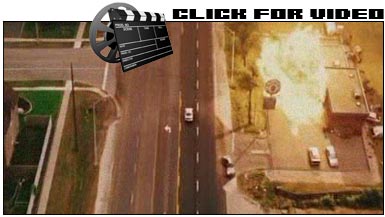
Alfred Hitchcock set a precedent for looking down at chaos from above in his ariel shot of the birds gathering their forces over the besieged fishing village in The Birds (see #6). Zach Snyder takes a similarly remote view of the chaos Sarah Polley drives through in the pre-credits sequence of his excellent remake. Once again (see #45) injudicious use of exhaust distortion (on the helicopter) is the only carbuncle on this astonishing shot of a zombie-strewn world descending into chaos, and it’s the incident at the petrol station (at the end of the sequence) that really drives home the sense of apocalypse.
21: The Ten Commandments (1956) – Moses parts the sea.
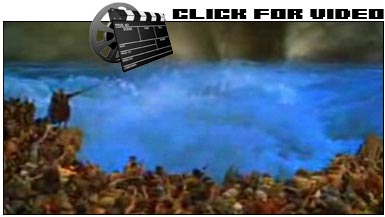
Cecil B. DeMille’s second chance at parting the red sea (which he had first done with his prior version of The Ten Commandments in 1923) provides one of the great spectacles of the 1950s. Water had proved the bugbear of many an SFX artist, and here DeMille follows a similar technique as tried in The Dambusters (1955). The technique involves isolating suitable footage of cascading water in moving matte areas, and this it is that provides the great backward-moving flukes that reveal the impressive ‘parted sea’ model (a Hollywood attraction for many years afterwards). Considering that SFX artists were getting equal or worse results 20-30 years later, this is a ground-breaking and ambitious piece of footage greatly assisted by reverse photography.
20: Things To Come (1936) – Everytown.
William Cameron Menzies’ loose adaptation of H.G. Wells’ vision of Britain’s future is a patchy affair both in narrative and SFX terms, but this hanging miniature shot can’t be faulted, particularly regarding its elaborate integration with the crowd below. This is a rather late answer to Metropolis (see #10) but also a more fluid integration of model architecture with real people. Hanging miniatures were used quite extensively in Aliens, providing both the upper ‘alien-ised’ architecture of the reactor centre and also 75% of the Sulaco’s hangar bay.
19: Back To The Future Part II (1989) – Landing the DeLorean at night.
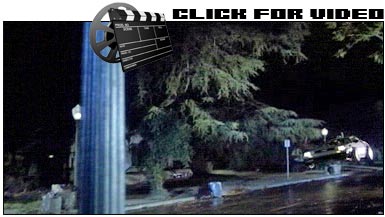
The secret to a good effects shot (at least one where you know that the shot is impossible in the real world) is psychologically integrating the impossible element with the parts of the scene that are manifestly real. Here the ever-ingenious Robert Zemeckis uses a street-lamp to mask the transition between model and real DeLorean. The matching of shadows and lights is extraordinary, and if it weren’t for the fact that the car’s headlights only have a road-reflection after they pass the street-light, it would be a perfect SFX illusion.
18: Total Recall (1990) – Doing her nails.
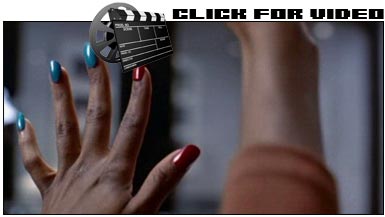
This is an example of a simple effect that could probably have been achieved in the 1950s, if anyone had written a sci-fi script where a woman could change the colour of her nails with a tap on some future-gizmo. The nails are rotoscoped to provide an area for an animated colour transition to take place, and that’s all there is to it. It’s an elegant and not terribly expensive SFX shot that is 100% convincing.
17: The Road To Perdition (2002) – Entering Chicago.
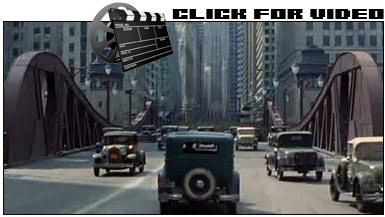
You don’t have to recreate the whole damned world to ‘sell’ period, but you do need to pull out the stops on one shot that establishes era. SFX house Cinesite provide Sam Mendes with an unforgettable introduction to 1930s Chicago here, where cinematography, music and first-tier CGI work combine to take one’s breath away. The convenient flock of birds throwing the skyscrapers into relief are gilding the lily a little, but otherwise this is flawless.
16: War Of The Worlds (2005) – Destroying the bridge.
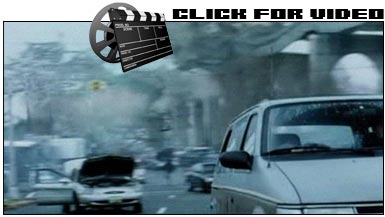
This ILM shot was used to sell Spielberg’s reimagining of both the 1953 George Pal production and H.G. Wells original book, and it’s a marvel of frightening destructiveness custom-made to tap into the horrors of post-9/11 culture. The supposed camera operator sensibly moves towards areas of interest whilst not over-doing the manic camera shake. WoTW is actually quite a close-set and intimate film, and the relatively small clutch of ‘hero’ shots like this are intended to sell us the scenario so we’ll understand the claustrophobia of Tom Cruise’s plight as he searches for shelter. No-one could afford to make a film with very many labour-intensive shots like this, but WoTW could’ve used another 10-15. Nonetheless, you can really see where the money went in this footage.
15: The Last Starfighter (1984) – Starfighter leaves orbit.
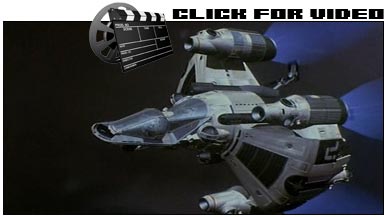
SFX wizard John Dykstra marks Nick Castle’s CGI-laden adventure as the moment that it was clear where optical effects were heading. Only two years after TRON (see #9), even the Cray X-MP computer couldn’t hope to integrate non-stylistic live footage seamlessly with computer-generated special effects, and the film’s ‘computer game’ link (TRON‘s excuse for the low-res effects) was too tenuous to bridge the gap. Nonetheless we see advancements here in rendering phong shaders, huge advancements in transparency shaders and also diffused shadow rendering. There’s still only very limited bitmap-texturing, but this shot is one of the most ambitious in Starfighter and it foreshadowed the SFX revolution of the 1990s by over six years.
14: King Kong (1933) – Kong wrecks the subway.

This shot, with inserts of screaming citizens removed, is one of the most elaborate in Willis O’Brien’s fantasy classic, and a veritable masterpiece not only of animation but of compositing. Every part of the frame is alive with action – check out the strangely loitering gawpers at the windows, stage right. Note also that fleeing crowds pass both in front of and behind Kong. Also notice the animated passengers in the bottom left-hand corner of the frame who succeed in climbing down from the wrecked subway train and flee their furry persecutor. It’s a shame no-one thought of the go-motion approach for the first train, which passes in a particularly stiff manner, but that doesn’t take away credit for the evident weeks or months of work which went into this one shot.
13: Forrest Gump (1994) – Picking up Lt. Dan Taylor.
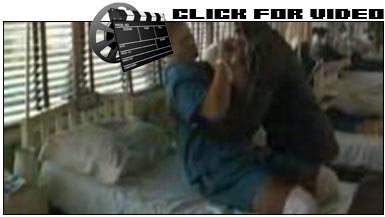
Once again Robert Zemeckis’ knack for combining good storytelling skills with SFX know-how finds him deservedly in this list again. Presenting fully-limbed Gary Sinise as an amputee for this shot required Sinise to keep his blue-stockinged lower legs dangling through two holes in the bed, which were later substituted with a combination of plate and CGI model material, whilst the areas around his knees were elaborately substituted with CGI stumps. You can see the bed dip and rise as Sinise is lifted off, so it’s no easy matte substitution, and the sheets even respond to the passing of one of his ‘stumps’. Totally convincing.
12: Excalibur (1981) – Sword withdrawal.
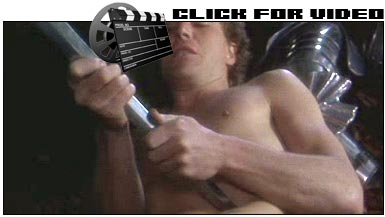
Having re-spun the Luke-Skywalker-fights-himself scene from the previous year’s The Empire Strikes Back, Lancelot (Nicholas Clay) extracts his own sword from the left side of his abdomen. Dazzlingly perfect, this is perhaps literally the oldest trick in the book: a retractable blade combines with a drop-away ‘exit wound tip’ to create a perfect illusion. This trick could have comfortably been performed at the court of the real King Arthur; but if it ain’t broke…
11: Return Of The Jedi (1983) – ‘There’s too many of them!’
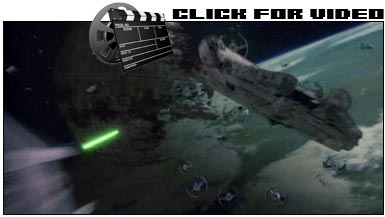
To give some idea of how hard a composite matte shot with 40+ elements was in the days of photochemical special effects, check out our interview with John Dykstra (he discusses this at the bottom of page 1). Even with ILM’s improved compositing techniques, getting that many elements to combine when the failure of only one could mean starting from scratch, is a huge achievement.
10: Metropolis (1926) – View down onto the main street.
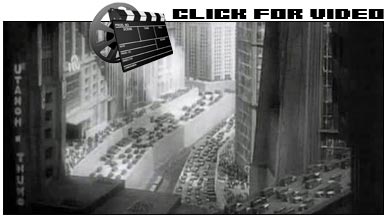
Fritz Lang’s truly seminal SF masterpiece boasts a number of SFX shots that were not only iconic but ground-breaking in their use of hanging miniatures, miniature sets and a makeshift method of compositing known as the “Schufftan Process”, which involved removing strategic areas of silvering from a mirror and projecting ‘live’ footage onto the other side. But the film is best known for its astonishing model work, of which this shot is a particularly fine example. Note that the cars and vans of Lang’s future city move at varying speeds and even veer a little to the left or right. Also, the use of bright sunlight truly captures the sense of scale of a grand metropolis, and this is less evident in some of the more widely-reproduced shots featuring flying machines.
9: TRON (1982) – Escape on the light-beam.
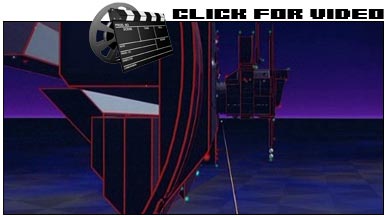
Having taken a sound thrashing at the box-office when pitting its old-style The Black Hole against Star Trek: The Motion Picture in Christmas of 1979, Disney was desperate to update its appeal for a generation of kids beginning to think of it in terms of ‘old’ movies. Consequently The Mouse leapt on Steven Lisberger’s crazy idea for a semi-CGI adventure – even though CGI was a preserve mainly of theoretical labs at the time. The sails on the ‘Solar Sailor’ in this shot had a small amount of transparency to them throughout most of the movie, something that was going to add a fair chunk of cash to the rendering pipeline, but which Lisberger held out for. In this particular shot, the transparency has been filled in after a ‘charge up’, possibly due to the scope of the shot and the enormously increased rendering times for a transparent element within it. The shot itself presages the style of many a later CGI adventure, as well as clearly harking back to the holy grail of sci-fi movies – Star Wars.
8: Cloverfield (2008) – First look at the devastation.
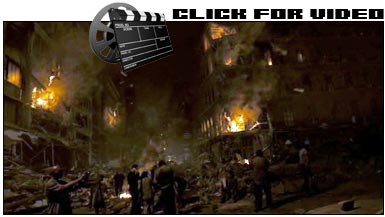
Matt Reeves’ initial peek out into post-monster New York is a masterpiece of match-moving, with miles of virtual debris apparently available for the hand-held camera to zoom in on at will. Oddly, it’s only the head of the statue of liberty that looks fake*. It would be a mistake to use the effectiveness of this technique as an excuse for yet more ‘hand-held’ Hollywood films, but advances in match-moving are likely to make this kind of seamless CGI integration far more affordable in the next few years.
*Thanks to VFX artist Riddick 1 for pointing out to me that the head was not a prop. Check out his comment below, and you’ll see that – fake-looking or not – the CGI Lady Liberty fooled Paramount itself.
7: Hannibal (2001) – Brains for dinner.
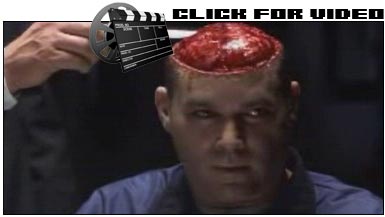
Though utilising similar motion-capture/CGI combos to Terminator 3‘s ‘ruined face’ effect (see #24 ), it’s fairly unlikely that any use of the technique has wrung more horror (or dinner) out of people than when a drugged Ray Liotta is served his own brain-tissue to eat in Ridley Scott’s horrific sequel to Silence Of The Lambs (1991). An animatronic head was used for certain close-up sequences not directly involving Liotta’s face, but this shot is all CGI and mo-cap. The only thing that potentially diminishes the effectiveness of the shot is the dark background, which rather gives the impression of sleight-of-hand or a magic show, when in fact the CGI doesn’t need it in order to work.
6: The Birds (1963) – Destruction of Capitol Oil garage.
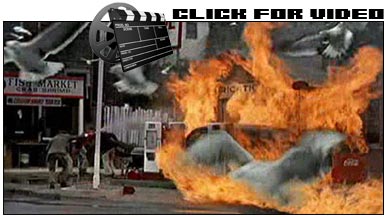
An extraordinarily complex piece of compositing (shown in the clip with inserts removed) which demonstrates Hitchcock’s continuing urge to push the lackadaisical state of the art. The flapping of the birds’ wings caused too much fringing for conventional blue-screen work to be utilised, and Hitchcock was forced to turn to the ‘yellow screen’ or ‘sodium vapour process’. Only Walt Disney studios have ever been equipped for this process, and indeed only one camera has ever been rigged for it. SVP involves filming the subject against a screen lit with powerful sodium vapour lights utilising a very narrow spectrum of light. Unlike most compositing processes, SVP actually shoots two separate elements of the footage simultaneously using a beam-splitter; one reel exposed is regular photographic stock and the other an emulsion sensitive only to the sodium vapour wavelength. Very precise mattes are obtained from the latter, allowing the subject to be pulled out of the background and combined with any other in a later run through an optical printer. The fringing or ‘matte line’ effects are negligible compared to blue-screen work, but the very precise conditions under which the footage must be shot mitigated against its wide usage. Disney, to whom many shots in The Birds was farmed out, used the process in numerous films including Mary Poppins (1964), Freaky Friday (1976)and The Black Hole (1979).
5: The Spy Who Loved Me (1977) – Heading for Stromberg’s Lair.
Possibly the first successful example of match-moving in motion pictures, Derek Meddings’ audacious attempt to co-ordinate the aquatic lair of Bond’s latest adversary into hand-held footage was a real eye-opener at the time, and another extraordinary achievement for a franchise which has frequently pushed the boundaries of optical effects.
4: The Lost World (1997) – T-Rex takes a drink.
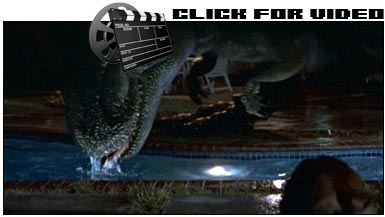
Here the T-Rex from the hugely successful dinosaur franchise is so perfectly integrated into its environment that one initially assumes it is the Stan Winston animatronic. Only when its movements become a little bolder in warning off the barking dog do we realise that it must be CGI. Selling an element so incongruous in an environment so familiar represents an extraordinary work of lighting and movement. The Rex shifts its weight superbly, and there’s very little to give it away, even on close examination.
3: Star Wars (1977) – Into the trench.
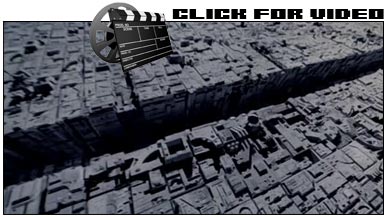
Though the opening shot of Star Wars remains the most iconic, it suffered sniffy criticism from some quarters for being a higher-speed re-run of Douglas Trumbull’s initial pan on the Jupiter mission in 2001: A Space Odyssey (1968). This shot, on the other hand is not only equally exciting but far more original, as we take the point of view of a rebel fighter diving into the Death Star’s trench to take a shot at the reactors. The vast scale of the Death Star is revealed as soon as we have made our dizzying descent downward, and we see the walls of the trench extend for miles ahead. This three-element shot (model, laser-bolts and star background) relies on the flexibility (rather than the repeatability) of the Dykstraflex motion control system, and is still a stunner.
2: Star Trek II: The Wrath Of Khan (1982) – The Genesis project.
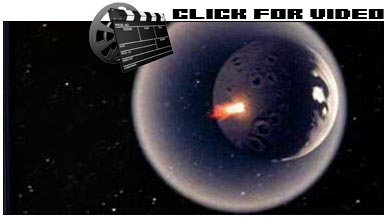
While TRON (see #9) was going for the low-res marathon at the box-office, the first of Nick Meyer’s very popular Star Trek entries was wowing cinema-goers with some truly advanced CGI sprint-work from ILM showing the effect of the life-giving ‘genesis device’ on a planetary scale. When the lengthy rendering process was well-advanced, someone spotted that the virtual camera was about to crash into one of the randomly created mountain ranges. So much time and work would have been lost starting from scratch that it was decided to magically introduce a valley to let the camera through (visible about 39 seconds into the clip). This extraordinary sequence showed the future both of ILM and visual effects, even if there was yet a long wait for the hardware bottlenecks to clear up.
1: JurassicPark (1992) – T-Rex investigates the light.
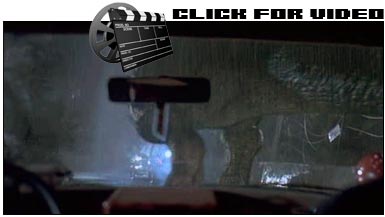
One of the oldest clips from the world of bitmap-textured CGI animation, and – to my mind – simply the most convincing ‘impossible thing’ ever committed to celluloid by Hollywood. The segue between the withdrawing of Stan Winston’s animatronic head and the appearance of the CGI version is effective and seamless, playing both technologies to their strengths. The movement of the musculature in the T-Rex combines with the very prosaic illumination of the car headlights to sell the Rex, and the camera judder combines perfectly with the footfalls of the massive beast. Rain and darkness have sold many a special effect before, and they certainly do no harm here, but the result is pure movie history.
“Effects these days are in the hands of everyman. You can go shoot a movie of broadcast quality on your own. But it doesn’t necessarily mean we’re seeing better movies. Shakespeare didn’t have a word-processor. When we got word-processors, we didn’t get Shakespeare. We gotta separate the two out. There’s creativity and there’s technology, and the two are inter-related. But technology is not necessarily creative.”
Harrison EllenshawTRON – Visual Effects Supervisor, Associate Producer
Why these ‘classics’ aren’t in here:
Planet Of The Apes (1968) – discovery of the Statue Of Liberty.Charlton Heston stumbles upon a competent – but not superb – matte painting of a post-holocaust Lady Liberty at the end of the furry sixties classic. The shot is iconic because the idea is mind-twisting; it’s a fantastic ending, but the SFX tech and execution behind it were not ground-breaking, totally convincing or even exceptional.
The Matrix (1999) – Bullet-Time.
An effect extraordinarily limited in what can usefully be done with it, it has nonetheless been flogged to death in the 10 years since The Matrix.
29th December 2008